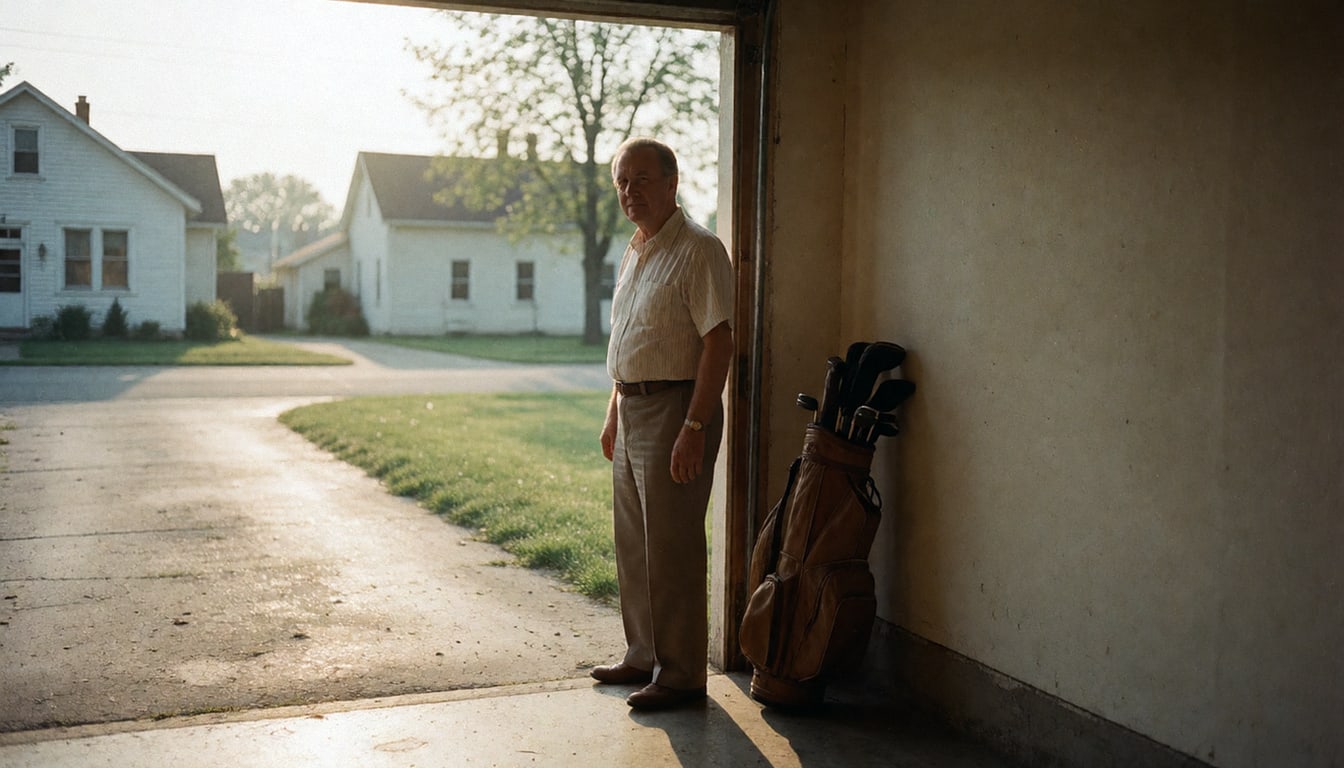

The call was nineteen minutes and it moved a trip that had been parked in next year for six years.
I had called for no reason. Nothing to sign, nothing to report, no market commentary. It was a Tuesday in October and I had a short list of households I wanted to hear from before Thanksgiving. I said what I always say. Nothing is wrong, I have twenty minutes, tell me what you have been thinking about.
His wife got on the line halfway through and mentioned Ireland. Her grandmother came from a village in Kerry that she had never seen. She had been saying next year since before their youngest graduated.
So I asked what would have to be true for them to go in May.
There was a pause, and then two answers, and neither one was money. Somebody had to watch the dog. The shop needed covering for three weeks, which meant telling his foreman in the winter instead of in the spring. That was the entire obstacle. A dog and a conversation with an employee.
They went in May. I have had some version of that call a few hundred times over forty years, and the pattern almost never changes. When I open up a dream that has been deferred for years, the money is usually sitting right there in the plan. What is missing is a picture with a date attached to it.
The annual review is the wrong instrument for this
I ran annual reviews for the first fifteen years of my career and thought I was giving people excellent service. I was thorough. I could tell you a client's allocation to the basis point and I could explain a year of performance in a way that made sense to a farmer or a dentist.
Here is what a once a year cadence does to a life question, though. It gives the client twelve months to talk themselves out of it.
Somebody mentions the trip in March. You write it down, you do the responsible thing and note it as a future cash flow. Next March comes around and there is a new statement on the table, a market to explain, a beneficiary form that needs updating, and forty minutes of agenda before you get anywhere near Kerry. So it does not come up. It does not come up the year after that either. By the fourth year the client has quietly reclassified it from a plan to a nice idea, and once something becomes a nice idea it stops being anybody's job.
An annual meeting is built to review what happened. It is a poor container for what somebody is still deciding. Deciding needs frequency, because a person's picture of their own future changes in small increments and it needs somewhere to land while it is still soft.
Twenty minutes, four times a year, is enough.
What the twenty minutes actually contains
This is the sequence I have used, and it is simple enough that an advisor could start it this week.
Schedule four calls a year per household, off the review cycle. If your reviews land in the first quarter, put the calls in February, May, August and November. They are calls, not meetings. No conference room, no packet, no preparation on the client's side. I made most of mine from the truck.
Open with why you are calling, in the first sentence. When a client sees your name come up unexpectedly they assume something is wrong, and you will spend the first five minutes undoing that if you do not handle it immediately. Nothing is wrong. I have twenty minutes and I wanted to hear what you have been thinking about.
Ask about one pillar, not five. One call is Experiences. What is on the list for next year and what is in the way. One call is Purpose, which for a business owner in his sixties is the most productive twenty minutes you will ever spend. One is Health and Longevity. One is Legacy, and that one usually starts with the grandchildren and ends somewhere you did not expect. Rotating means you cover the whole of somebody's life in a year without ever running an interrogation.
Do not solve anything on the call. This is the discipline that advisors find hardest, because we are wired to be useful in the moment. Your job in twenty minutes is to hear it accurately and write down one line. Solving it is what the Blueprint and the Build are for.
Get a month attached to it before you hang up. Not a year. A month. This is the single move that separates a plan from an intention, and it costs you one extra question. Would that be a spring thing or a fall thing. Would that be before or after the grandkids get out of school. A dream with a month on it starts generating decisions on its own, and the client makes most of them without you.
Then the line goes on the Dream Board, where they can see it and so can you.
Open the next call with what they said last time. That is the part that does the real work. How did you get on with the foreman. Did you decide about May. Nobody in their life is following up on the thing they mentioned in passing nine weeks ago, and when you do it, something changes in how they think about you. Performance reporting says you are competent. Following up on the trip to Kerry says you were listening.
The objection I hear first
It is always the math. Two hundred households times eighty minutes a year is more than two hundred hours, and that is before scheduling, notes and the ones that run long.
That objection is fair and the answer is that you do not start with two hundred. Take the twenty relationships that matter most and the ten where you have a feeling the plan is pointed at the wrong life. That is thirty households, which is about forty hours a year, and a fair amount of it replaces calls you are already making for worse reasons. Most of us have a habit of calling clients when the market does something dramatic. Those calls make people anxious and teach them that you contact them about volatility. Spend the same time on the other conversation.
Also, half of these calls do not take twenty minutes. Some take eight. The point is the cadence rather than the duration, and the ones that run to forty five minutes are the ones where something important was waiting.
The second objection is that clients do not want to talk about their lives. Some do not want to talk about their lives with somebody who has only ever asked them about risk tolerance. Frequency is how you earn the right, and the third call is a completely different conversation than the first.
What it does to the plan and to the practice
I travel sixteen plus weeks a year. People assume that means I have more discretionary time than my clients did, and that was never true. I book the weeks in January before anything else goes on the calendar, and then the rest of the year has to arrange itself around dates that already exist. That is the only trick. A month on a calendar behaves differently than an intention in your head. Procrastination is the assassination of your destination, and the antidote is a date somebody else knows about.
What the calls do inside a firm is less obvious than what they do for a client. They give your Maintenance meeting something to be about besides performance. They surface the account you did not know existed, because consolidation tends to follow depth. And they put the relationship into a written record, four times a year, in a form that a second advisor could pick up and continue if you were hit by a truck.
That last one is worth sitting with. If everything you know about a household lives in your head, you do not have a business yet. Twenty minutes, four times a year, written down where the team can see it, is the cheapest way I know to start fixing that.
The agendas for all four meetings are written up here, including where these calls sit between them.
Or tell me what you would ask in your twenty minutes, and I will answer you myself.