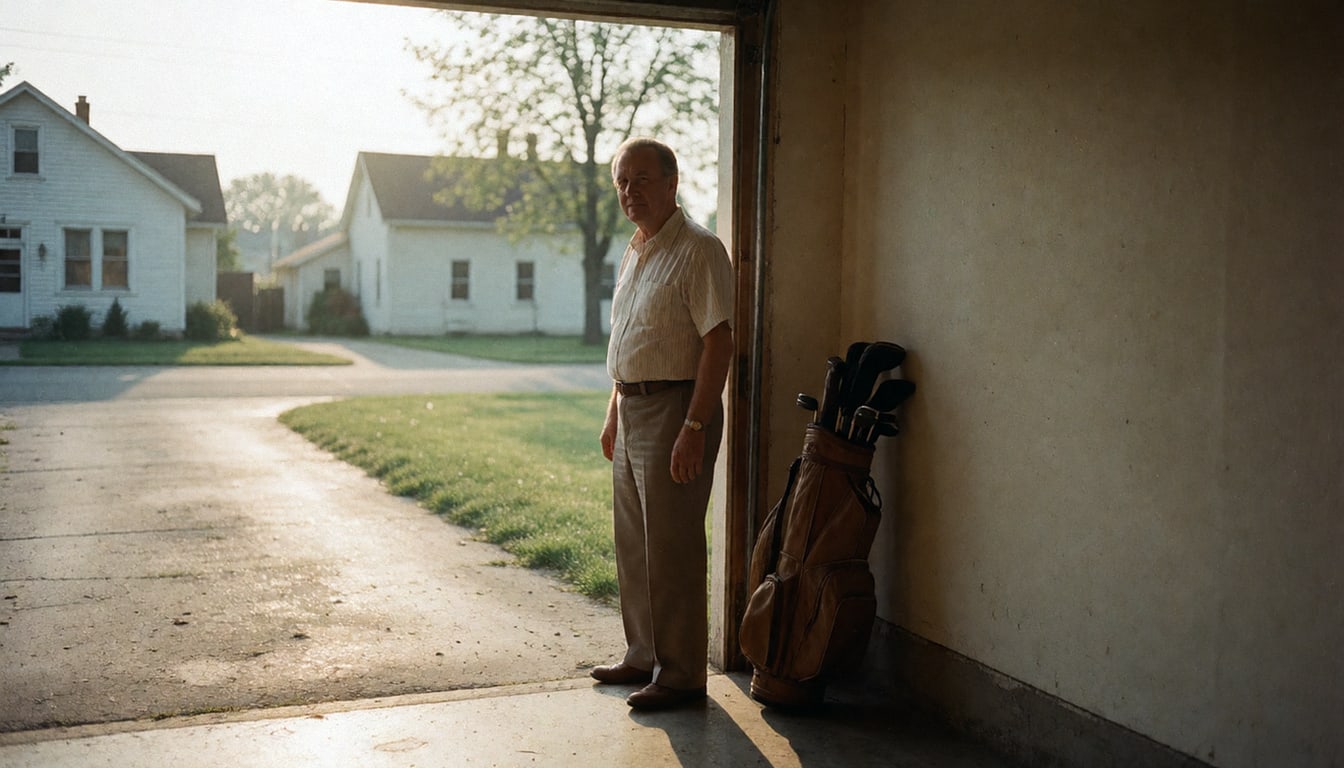

A man in his early sixties told me he wanted to walk the Camino de Santiago. Five hundred miles across northern Spain, on foot, carrying his own pack. He said it in the Vision meeting, and his wife looked at him like he had announced he was joining the circus.
I wrote it on the Dream Board. Then I asked him when.
He said in about eight years, once the business was sold and things had settled down.
I asked him how far he could walk today.
He laughed, then stopped laughing, then said he did not know. He had not walked more than the length of a parking lot in a while. His knee bothered him. He had been meaning to get in to see someone about it for two years.
That is the whole conversation. It took ninety seconds and it changed his plan more than any allocation decision I made for him in the following decade.
Why a Dream Board is different from a vision board
A vision board holds inspiration. Pictures of what you want, pinned somewhere you will see them. There is nothing wrong with it, and there is nothing in it that does anything.
A Dream Board holds inspiration and intention in the same place. The dream goes on it, and next to the dream goes the honest answer to two questions: when, and what has to be true first.
That second question is where health walks into a financial plan without anybody having to make it awkward. A man who wants to walk five hundred miles at seventy is describing a physical requirement, whether he means to or not. He has told you something about his body and his timeline in the same breath as telling you about his money.
I am not qualified to say a word about his knee. I am extremely qualified to notice that his plan and his trajectory are pointed in different directions, because that is the same thing I do when someone tells me they want to retire in three years and spend two hundred thousand a year on a portfolio that will not carry it.
A thirty year plan held by someone on a fifteen year trajectory has a math problem in it. The math problem shows up first. That is the part I own.
How to raise it without pretending to be a doctor
Advisors tell me they feel they are not allowed to ask. I understand it. There is a real line, and crossing it would be both unprofessional and useless, because I have no medical opinion worth hearing.
So I do not ask a medical question. I ask a planning question that happens to require a truthful answer about health.
Here is the sequence I actually use, in the Vision meeting and again in Maintenance.
First, get the dream on the board with a date attached. Not a decade. A year. Vague dreams cannot be tested against anything.
Second, ask what the dream physically requires. Walking, lifting, flying long haul, sleeping on a boat, keeping up with a four year old on a beach. Most people have never thought about their dream in these terms and they find it interesting rather than intrusive.
Third, ask the plainest version of the question. "Is there anything about your health that would make you want to move that date closer?"
That is it. No diagnosis language. No statistics. No lecture. You have asked a scheduling question, and you have given the person a reason to tell you the truth, because the truth changes something they want rather than something they dread.
About half the time the answer is no, and you have lost ninety seconds and gained a client who knows you are paying attention to the whole of them.
The other half of the time you learn something you would never have found in a review meeting. A shoulder that has not worked properly since 2019. A father who died at sixty eight and a son who has been quietly assuming the same number. A wife who has been trying for a year to get her husband in for a physical and has just been handed an ally.
Fourth, and this is the part most advisors skip, write the answer on the Dream Board next to the dream. Intention alongside inspiration. Camino, age sixty five instead of seventy, and the first step is a knee that works.
What the honest answer does to the numbers
Here is where it stops being a nice conversation and starts being financial planning.
That man moved the Camino from eight years out to two. Which meant the business sale had to move, or the trip had to happen before the sale, and after some argument he decided the trip would happen first and he would take three weeks out of a year he had told himself he could not leave. His wife, who had been silent through most of this, said she wanted to walk the last hundred miles with him.
Moving a dream forward five years is a cash flow event. It changes when money is needed and in what shape. It changed his spending pattern in his sixties, which changed the assumptions running underneath the rest of it. None of that came from a market view. It came from a knee.
The deeper change was to the spending curve. Most plans I inherit assume a flat number across thirty years, which is a shape almost nobody's life actually takes. People spend heavily in the first ten years when they are able, less in the middle, and then differently again at the end. When health is on the Dream Board, that front loaded decade stops being a guess and starts being a decision the client made on purpose.
Some plans get shorter and richer. Some get longer, because the honest answer was better than the client feared and they had been holding back for no reason. Both are useful. Both are impossible without asking.
Where the Collaborators come in
Everything above is inside my competence. What comes next is not.
I cannot look at that knee. I cannot tell a man anything about his father's history or what a proactive, root cause approach to his own health would look like. If I tried, I would be doing harm and stepping outside my lane at the same time.
What I can do is know exactly who to hand him to, and stay in the room while it happens.
That is what Collaborators are for. Health & Longevity is one of the Five Pillars, and the specialists tied to that pillar do the work I am not qualified to do. The client gets a real answer from someone who has spent a career earning the right to give it. I get an honest input for the plan. Nobody has to pretend.
The advisor stays the architect. The dream stays on the board, with a date on it. The specialist comes in, does the part only they can do, and the plan gets adjusted to the truth.
What you should not do is what I did for the first fifteen years, which was hear something about a client's health, feel the discomfort of it, and move on to the next agenda item because I had nowhere to put it.
He who has his health has a thousand wishes. He who does not has one. That line has been sitting in my practice for a long time, and it is a financial statement as much as a human one. Every other pillar sits on top of this one.
Ask the scheduling question. Write down the answer. Then bring in someone who knows what they are looking at.